Every Manufacturing Intelligence engagement follows the same framework: we assess whether a specific Japanese factory can meet your product requirements, regulatory obligations, and export documentation needs.
Compare current factory documentation against 21 CFR Part 111 or equivalent standard. Identify remediable gaps.
3
OEM Capability Assessment
Verify MOQ, lead time, formulation flexibility, and whether the factory has exported this product category before.
4
Documentation Package Review
Review or coordinate creation of batch records, allergen logs, COA format, and shipping documentation for US customs.
WHAT LOGISTICS INTELLIGENCE COVERS
Logistics assessment goes beyond freight rates.
Most logistics assessments stop at quoted shipping costs. We assess freight classification, carrier qualification, cold chain compliance, documentation readiness, and Incoterms risk — the factors that determine whether your landed cost matches your proforma.
1
Freight classification audit
Dimensional vs. actual weight analysis, HTS code verification, duty rate confirmation, and classification risk for FDA / customs holds.
2
Cold chain compliance
Temperature log documentation, certification status, break-in-chain risk points from factory to port, carrier qualification.
3
Incoterms analysis
Assessment of proposed Incoterms against your actual risk exposure. Most buyers accept seller-proposed Incoterms without reviewing the insurance and liability implications.
4
Documentation review
Commercial invoice, packing list, certificate of origin, phytosanitary / health certificates as applicable. We identify what is missing before customs does.
WHAT COMPLIANCE INTELLIGENCE COVERS
Compliance assessment is verification, not box-checking.
A facility can have valid FDA registration and still fail an import alert. A product can carry CE marking and still be non-compliant with the specific directive your buyer requires. We assess what the documentation actually covers — not what the supplier claims it covers.
1
Regulatory framework identification
Which regulations apply to your product in your target market: FDA 21 CFR, CE (which directives), TAA / DFARS, JIS, or other applicable frameworks.
2
Registration status verification
Facility registration current and in good standing. No open import alerts, warning letters, or consent decrees. Third-party audit history where applicable.
3
Documentation gap analysis
What documentation the supplier actually has vs. what your target market or buyer requires. Technical files, test reports, declarations of conformity, certificates.
4
Compliance roadmap
For products not yet compliant: what testing, certification, or registration is required, estimated timeline, and whether the supplier has the capability to complete it.
WHAT MARKET INTELLIGENCE COVERS
Market intelligence answers one question per engagement.
Market entry analysis is often too broad to be useful. We scope each engagement to a specific question: can this product be sold at this price through this channel? Is this TAM estimate realistic for this product category? What is the actual regulatory barrier to entry?
1
TAM sizing for your specific product
Not a category TAM. The addressable market for your product at your price point through the channels available to a new entrant without an existing distribution relationship.
2
Competitive set identification
Who is already selling a comparable product in Japan, at what price, through which channels. The goal is to understand whether you're entering a served market or creating one.
3
Regulatory and import barrier analysis
Product registration requirements, import restrictions, labeling requirements in Japanese, and licensing conditions that apply to your specific product category.
4
Distribution channel mapping
Which distribution channels are realistically available to a new entrant. Department store buyers, specialty retail, e-commerce, and foodservice each have different qualification requirements.
SELECTED WORK
Select Engagements
Every engagement here started as one scoped question. Client names are withheld — the constraint we found, and what it changed, are not.
Manufacturing
Northern Europe
250 units, factories at the table
Small-Batch Candle OEM for a Northern European Wellness Brand
Nine questions were put to the client before any factory was contacted. The gap was not in the product but in the context around it, without which no Japanese factory can price the risk.
The factory offered its Japanese GMP certification as proof of quality. It was genuine, and it did not satisfy US import requirements. The gap was raised before an order was placed.
A desk assessment of one supplier or one question, answered from public and registry sources. Delivered in writing.
One supplier or one question
Desk research — no supplier contact
2–3 page written finding
10 business day turnaround
MOST COMMON
Targeted Assessment
From $2,500
A focused assessment answering one specific question: can this factory meet your requirements? Is this market viable for your product?
Single-question engagement
Defined deliverable (written finding)
4–8 week timeline
One follow-up call included
COMPLEX CASES
Full Assessment
From $5,000
A comprehensive assessment covering multiple dimensions: factory qualification, logistics, compliance, and documentation — for clients making a significant sourcing commitment.
Multi-dimension assessment
Full documentation package
8–14 week timeline
Two follow-up calls included
Fees are quoted and invoiced in USD. Final scope and fee are confirmed in writing before any engagement begins.
THE PROCESS
How an Engagement Works
01
Your Question
You send your sourcing question through the form. We reply in writing with what we would check and whether we can help.
02
Engagement Brief
We send a one-page brief confirming scope, deliverable, timeline, and fee. You approve.
03
Assessment
We conduct the assessment: factory visits, regulatory checks, logistics review, or market analysis depending on scope.
04
Written Finding
You receive a structured written finding with the answer to your sourcing question and what to do next.
FOUR ASSESSMENT TYPES
What the Work Looks Like
01
MANUFACTURING INTELLIGENCE
Factory Assessment
On-site visit: production line, QC records, capacity
Equipment age and maintenance documentation
Labor structure and retention rates
Export history and documentation capability
Quality system audit (ISO, GMP, or equivalent)
02
LOGISTICS INTELLIGENCE
Logistics & Cold Chain Assessment
Freight classification review (dimensional vs. actual weight)
Cold chain compliance: temperature logs, certification
Incoterms analysis for proposed shipping routes
Customs documentation review
Carrier qualification for the specific product
03
COMPLIANCE INTELLIGENCE
Regulatory Compliance Assessment
Applicable regulatory framework identification
Registration status verification (FDA, CE, TAA)
Documentation gap analysis
Required testing and certification mapping
Timeline estimate for compliance completion
04
MARKET INTELLIGENCE
Market Entry Assessment
TAM sizing for the specific product category
Competitive set identification (existing suppliers)
Regulatory and import barrier analysis
Distribution channel mapping
Pricing benchmark vs. current alternatives
THE DELIVERABLE
A Written Finding. Not a Slide Deck.
Every engagement produces a structured written finding: the question we were asked, what we found, and what it means for your decision. The document is written to be used — in a board briefing, a financing process, a vendor negotiation.
WRITTEN FINDING — STRUCTURE
Question scoped
Assessment methodology
What we found (primary)
What we found (secondary)
What it means for your decision
Recommended next step
PRINCIPAL
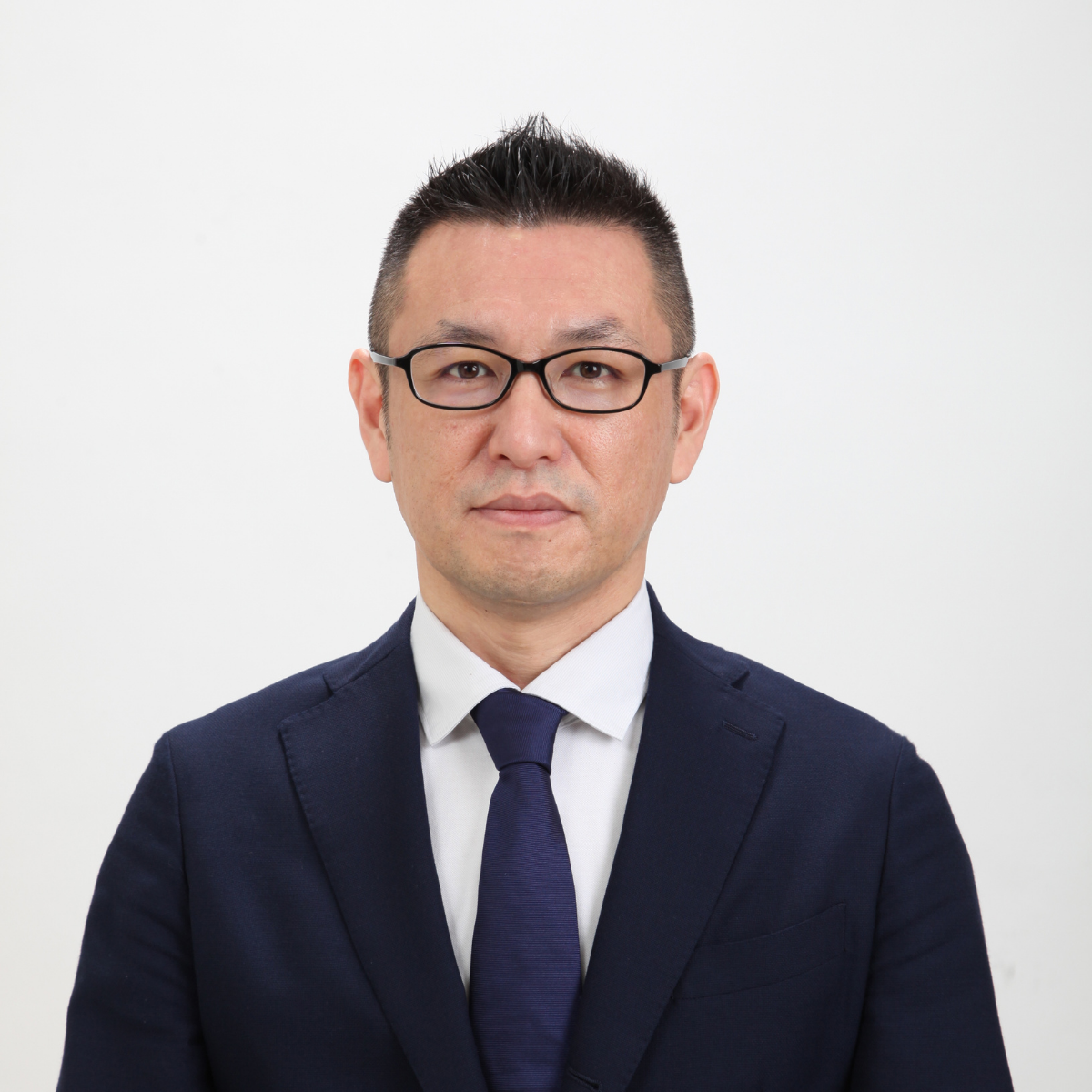
Photo: Wataru Sato
Wataru Sato
Principal, Sourced in Japan / Japan Consulting
I spent eleven years as CFO of a listed Japanese company with operations across more than 40 countries. The work was mostly about verifying what the numbers behind a supplier actually meant — not what they claimed to mean.
I left that role in 2009 to build Japan Consulting. Since then I have worked with more than 500 companies on cross-border trade — sourcing, compliance, logistics, and market entry — across more than 40 countries. Much of that work has been on the buying side, where a supplier’s paperwork and what is actually on the factory floor stop matching faster than most buyers expect.
The practice started with one observation: most buyers entering the Japanese market ask questions that are either too broad to answer or too narrow to trust. They're looking for certainty in a market that rewards patience and specificity.
Sourced in Japan exists to answer one question at a time. We assess factories, map regulatory requirements, and document what we find. That's the product.
40+
Countries of
operational exposure
11yr
CFO tenure,
listed Japanese company
7
Engagements
completed — SiJ Phase 1
OUR PRINCIPLES
How We Think About Assessments
One question at a time
We scope every engagement to answer a single, verifiable question. A scoped question produces a usable answer. A broad mandate produces a report.
Written findings only
Every engagement ends with a written finding. Not a slide deck. Not a verbal debrief. A document you can bring into a board meeting or a financing process.
No ongoing advisory
We don't build retainer relationships. We're not trying to create dependency. We're trying to give you something specific so you can make a specific decision.
Japan-only scope
We assess factories, supply chains, regulatory environments, and markets in Japan. That's the full scope. We don't work outside of that.
OPERATING ENTITY
Japan Consulting
Sourced in Japan is the English-language practice of Japan Consulting. Japan Consulting provides business development and market entry advisory to Japanese firms operating internationally. Sourced in Japan applies that same depth of market knowledge to international buyers sourcing from Japan.
Established
2009
Practice focus
International sourcing advisory
Base
Japan
English site
j-consulting.co.jp/en
COMMON QUESTIONS
Questions
What does an engagement actually produce?
A written finding. This is a structured document — not a slide deck, not a consultant's report — that answers the specific question we were asked. It includes what we assessed, what we found, and what it means for your decision. Typically 4–8 pages plus supporting documentation.
Do you work on retainer?
No. Every engagement is scoped to answer one question and ends with a written finding. We do not offer ongoing advisory, monthly retainers, or open-ended consulting arrangements. If you need a second assessment after the first, that is a new engagement.
Can you assess a supplier I've already identified?
Yes. Supplier-specific assessments are the most common engagement type. You name the factory or supplier; we assess whether it can meet your requirements.
What happens after I send my question?
You get a written reply within one business day. We’ll tell you what we would check in your situation, what usually goes wrong in that category, and whether a formal engagement is worth your money. There is no cost and no obligation for this.
How long does a typical engagement take?
A Targeted Assessment takes 4–8 weeks from brief sign-off to finding delivery. A Full Assessment takes 8–14 weeks.
What kinds of suppliers or factories do you assess?
Japanese manufacturers across manufacturing, logistics, compliance, and market entry — covering sectors including consumer goods, food and beverage, industrial components, defense-adjacent, and healthcare-adjacent products. The common factor is Japan sourcing. We do not work outside Japan.
Can you help us identify suppliers, or only assess ones we've already found?
Both. If you name a supplier, we assess whether it can meet your requirements. If you do not have one yet, we identify candidates and assess them against your specification. Identification is a wider scope, so the fee depends on the product and how many candidates need screening. It is quoted case by case and falls outside the Sourcing Brief.
Who are your typical clients?
PE funds and institutional investors conducting Japan-sourcing due diligence. International buyers — consumer goods, industrial, specialty — qualifying Japanese factories. Importers facing compliance questions (FDA, CE marking, TAA). Companies conducting Japan market entry assessments.
Tell us what you're sourcing. We'll tell you what's realistic.
One paragraph is enough — name the supplier, the product, or the question you are stuck on. You get a written reply within one business day, at no cost and no obligation.