About

Former listed-company CFO. 17 years.
500+ companies supported into global markets | Wataru Sato

A former listed-company CFO's view of the numbers, and 17 years supporting more than 500 companies into global markets, go into designing the shift from outsourcing dependency to in-house operation and continuous improvement.

Wataru Sato: former listed-company CFO, 17 years independent, 40+ countries

Wataru Sato
佐藤亘
Representative Director
Japan Consulting Inc.
ジャパンコンサルティング株式会社
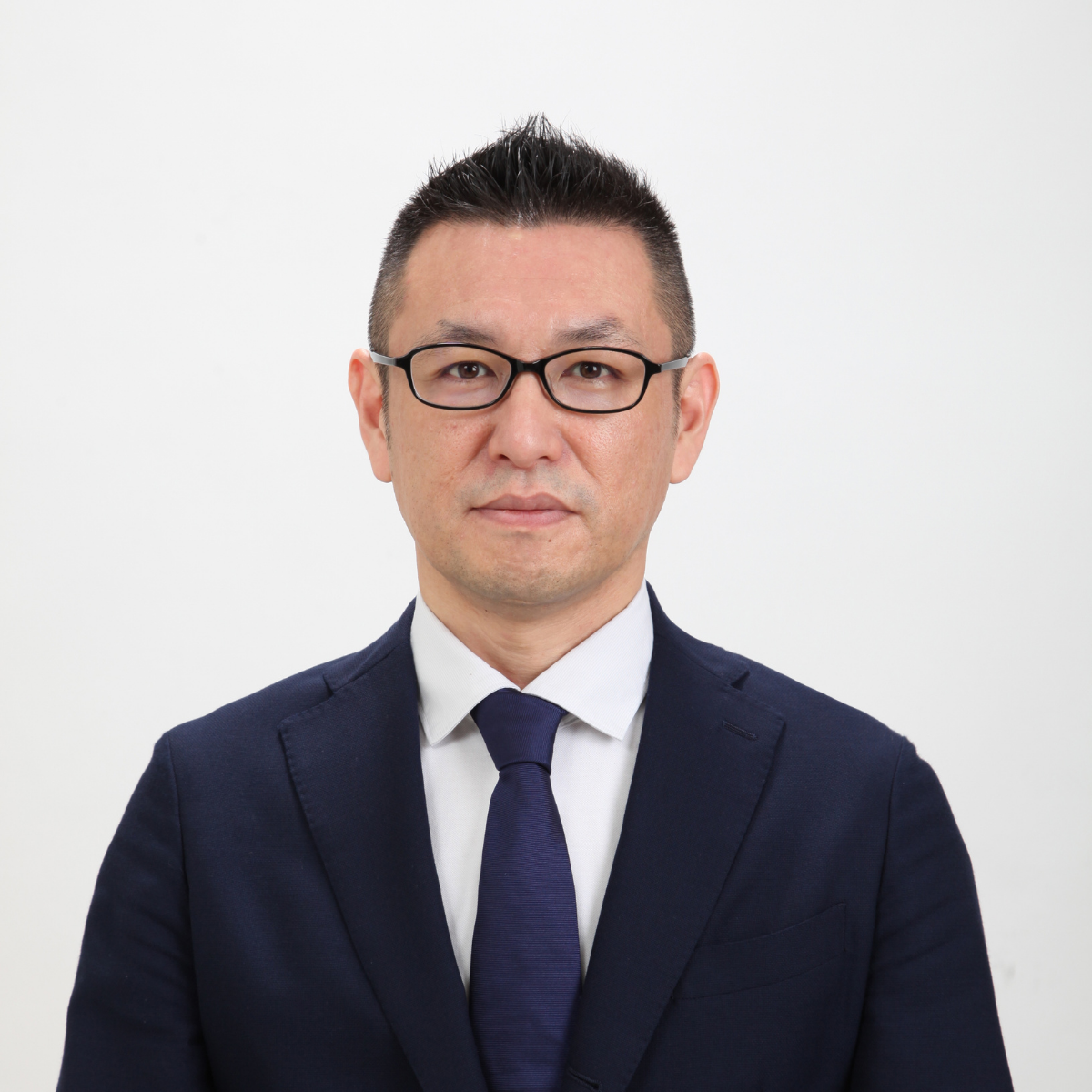
Wataru Sato, Representative Director of Japan Consulting Inc.
I spent 11 years as CFO of Vision Inc. After stepping down I travelled through 42 countries, and in the 17 years since going independent I have worked with more than 500 companies. Overseas sales, cross-border business, web marketing, finance and business design, and now bringing AI in-house. The subjects have changed. What has not is deciding by the numbers rather than by feel. And aiming for a state where the client judges, operates, and improves on their own, rather than depending on an outside party indefinitely.
Focus on what you can control: Markets, exchange rates, and competitors are outside your control. That is exactly why we concentrate on the design, the data, and the operating structure you can shape yourself.
Turn obstacles into design material : What did not work is not failure. It is material for sharpening the design. The pain of outsourcing dependency and market shifts became the method we use now.
Design first, do not rush: Before bringing in AI tools, design the purpose, the workflow, the approval rules, and the flow of data.

Global B2B marketing through a CFO's lens: turning a business into numbers

A CFO's job is to build the story into numbers
A CFO's role is not only accounting and financing. It is converting the company's vision into numbers, designing a profit model on top of the business strategy, and setting a realistic view of payback and a line for withdrawal. That experience is the foundation of today's work on AI in-house readiness, P&L reviews, and global B2B marketing. Even for a marketing initiative, decide by the numbers rather than by feel. Do not propose what has no visible return. That is Japan Consulting's basic stance.
Speak in numbers
We lay out outsourcing spend, internal hours, investment, and expected return as numbers. Not a vague sense of quality, but material you can decide on.
Set the line for withdrawal
Not only the reasons to proceed, but how far to invest and at what point to reconsider, designed from the start.
Create no dependency
The purpose of support is not to make you dependent on an outsider. It is to leave decision criteria and operating assets inside your company.

The real reason global expansion stalls: what 500 engagements have in common

Global expansion does not run on momentum alone.
Most companies that stumble abroad are not short on product strength. The problem is that which market, which buyer, which price, and which channel have never been laid out with numbers and facts. B2B and B2C differ in how you sell, in how long it takes, and in the investment required. That is why the first thing to design is not a website or an ad, but the conditions under which you can win.
Define where your competitiveness comes from
Quality, price competitiveness, distinctly Japanese strengths. We define with numbers and facts which of these will hold up abroad.
Do not confuse B2B with B2C
B2B is not a market that scales on social media alone. It needs a design built around partnerships, sales, trust, and the buyer's decision process.
Make it something your team can run at low cost
Global expansion takes time. That is why we design an operating structure your team can sustain from the beginning.

Look at the business case before the website: global expansion through a CFO's lens

Before the website, we look at the business case.
Supporting global expansion is not only building websites and publishing content. In practice it often starts from business design: can this product, at this price, compete in this market? At Japan Consulting we check price, competitors, distribution, and profitability from a CFO's perspective, and lay out the material for a decision.
Pricing strategy
We work out the price range that holds in a foreign market, accounting for local competitors, purchasing power, distribution cost, and margin.
Competitor research
We analyse competitors' pricing, messaging, targets, and channels to make your path to winning explicit.
M&A and cross-border research
Research on Japanese companies for overseas investors, and the material for deciding on entry into the Japanese market, organised from both the financial and the market side.

Market shifts built the method: 17 years

Market shifts built the method we use now.
Not everything went smoothly over 17 years. When the pandemic cooled the market and clients stopped moving, there was a period of asking whether this could continue. What kept it going was a habit from the CFO years. Look at the numbers rather than the feelings, face the reality, and redesign the business. That accumulation is what became the Self-Driven Growth Method™.

2019 — From overseas sales to the support side

After running an overseas sales business, the focus moved to supporting Japanese companies going abroad. Website builds, international SEO, digital marketing, and inbound work became the core of the business.

2022 — A new field takes shape

Support for foreign companies entering the Japanese market, OEM research, and research on Japanese companies for overseas investors widened the work. A CFO's financial view joined hands-on international experience, and the work moved from web support to involvement from business design onward.

2025 — The decision to bring AI in-house

As generative AI, CRM, analytics, and automation tools advanced, we reviewed the work we had been sending out. English content, SEO design, competitor research, reporting, and automation workflows moved in-house wherever they could. That practice is the foundation of the Self-Driven Growth Method™.

AI changed the premise: four waves

AI changed the premise.
Between 2025 and 2026, AI agents, n8n, Make, MCP, and API integrations put much of the work that used to go to specialist teams or outside partners within reach of your own team. Writing, research, translation, SEO design, reporting, workflow automation. Treating this not as efficiency but as a chance to rethink outsourcing dependency became the turning point in how our services are designed.
Wave 1:
Automating writing and research
Summaries, outlines, English translation, and competitor research all start far faster.
Wave 2:
Generating images, audio, and video
More options in content production, so a small team can publish more.
Wave 3:
No-code automation
n8n, Make, and API integrations opened room to automate repetitive work in-house.
Wave 4:
The AI agent era
What matters is designing what AI handles and what a person has to decide.

2025年、外注を自社に取り戻した:このサイトが内製化の実証

In 2025 we moved from outsourcing dependency to in-house operation.
As AI advanced, we reviewed the work we had been sending out. English content, SEO design, competitor research, social posts, reporting, automation workflows. We did not replace everything at once. We brought back what we could, tested it, and improved. This website is that proving ground. What we propose is not theory, but what we have tried and improved on ourselves.
60%
Outsourcing spend we found we could rethink
By moving part of English writing, translation, SEO, and reporting in-house, we confirmed the scope to rethink external spend substantially.
3x
Content production speed
We shortened the briefing, review, revision, and approval cycle, and set up a structure where first draft through improvement happens in-house.
6 months
A guide for the initial build and validation
Strategy design, content production, SEO design, AI workflows, and governance checks, taken in stages until the whole thing could be run in-house.
No extra cost
A structure that holds down additional outsourcing
With the workflows and the prompt library in place, articles, social posts, and reports are easier to keep producing in-house.

日本のB2B企業が世界で自走する時代を:500社から5,000社へ

From 500 companies, to the next 5,000 running on their own.
We do not think every company should have a large marketing department. What is needed is a system where even a small team can publish to global markets, nurture leads, and improve while watching the results. Based on what we have seen across more than 500 engagements, our work from here is helping Japanese B2B companies build the operating base to reach the world on their own.
From 500 to 5,000
We have supported more than 500 companies over 17 years. From here, with AI, CRM, and BI, we want to widen the number of Japanese companies that can publish, nurture, and improve for global markets on their own.
More global B2B from Japan
Mid-market B2B companies in Japan have technology, quality, and expertise that global markets value. We connect those strengths to web, content, CRM, and analytics, and shape them into something that reaches those markets.
Companies that run on their own pull the next ones forward
When one company can publish, nurture leads, and improve while watching results, that practice becomes a new standard in its industry. Increasing the number of self-driven companies is the starting point for raising the competitiveness of Japanese business as a whole.
Start with one question.
Tell us what you are trying to decide — a supplier you need assessed, or marketing you are trying to bring in-house. You get a written reply within one business day, at no cost and no obligation.